

TL;DR
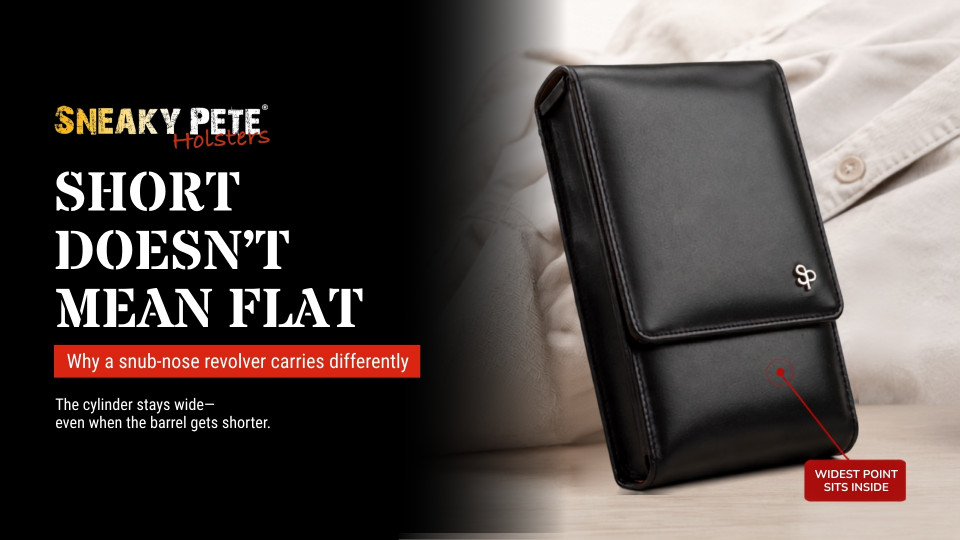
A snub-nose revolver is short, but it is not flat. The cylinder is the widest part, and that width is what shows through a shirt when a holster pulls the gun tight against your body. Carrying it on the outside of your belt in a closed case gives the cylinder somewhere to sit, so the shape stays out of sight and the draw stays simple.
Table of Contents
- Why does a revolver carry differently
- The cylinder is the part that gives you away
- Where revolvers tend to sit best
- Disguised carry and the revolver
- Why a pistol holster will not do
- FAQ
Why does a revolver carry differently
Plenty of people pick a small revolver as a first carry gun, and for good reason. There is no slide to rack, the manual of arms is simple, and a good one will sit in a drawer for years and still work when you pick it up. If you carry a small-frame revolver, you already know the appeal.
What surprises people is that the thing making a revolver easy to shoot also makes it awkward to hide. A compact semi-auto is essentially a flat slab. A revolver is not. Its shortest dimension is still thicker than most pistols through the middle, and that middle is the part that has to disappear.
The cylinder is the part that gives you away
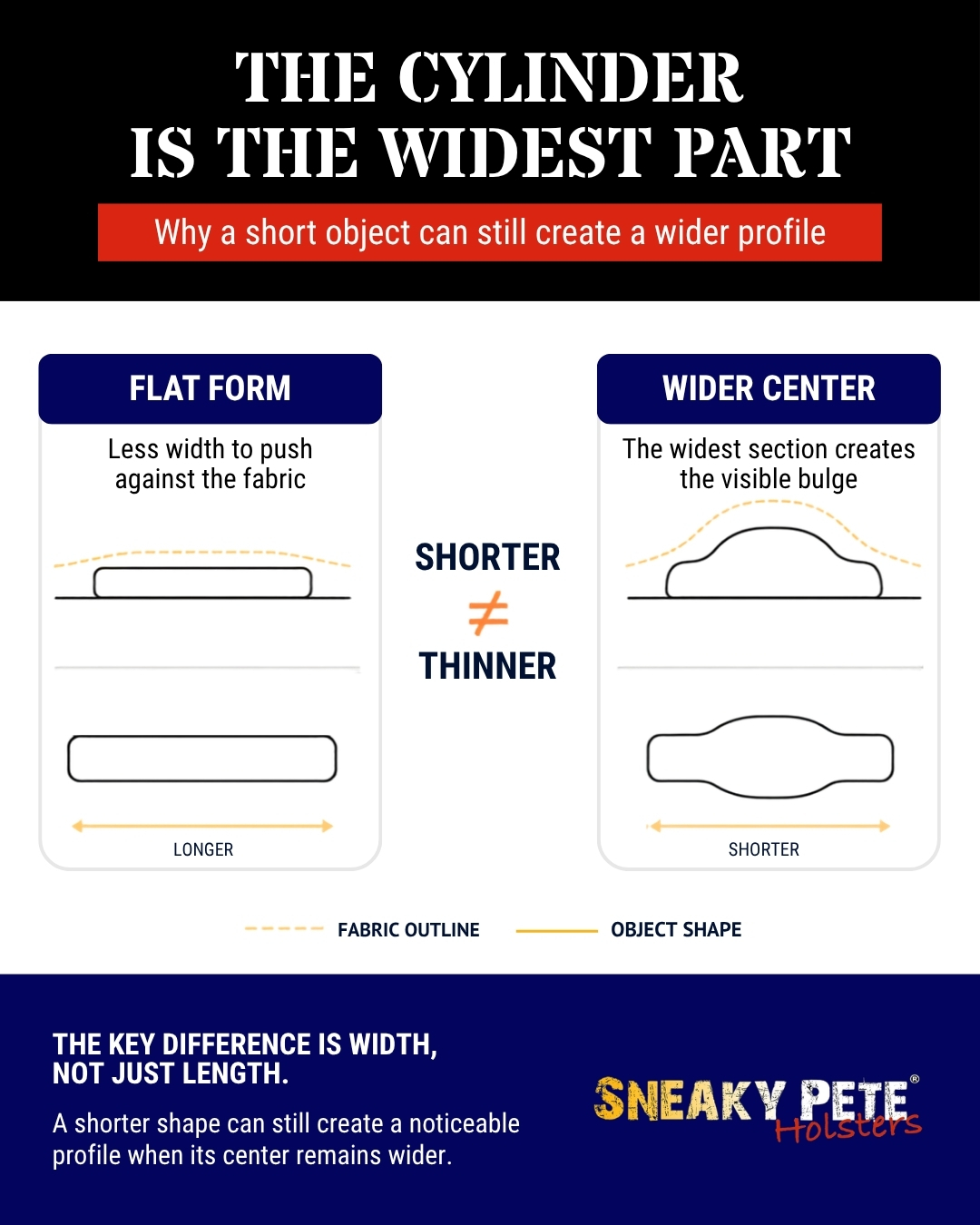
Cut the barrel down to two inches, and the gun gets shorter, but the cylinder stays the same width. So the profile you are hiding is not a long, thin outline. It is a short, round bulge, and it sits right at the point where your belt line meets your ribs.
Inside the waistband, the gun is pressed flat against you by your belt and your pants. That works well for a slim pistol. With a revolver, the belt has to go around the cylinder, which pushes it outward and creates a rounded shape that a shirt tends to drape over rather than hide. Bend to pick something up, and it announces itself.
This is the part most guides skip, and it is the reason a lot of people buy a revolver, try to carry it the way they carried a slim semi-auto, and quietly stop carrying it.
Where revolvers tend to sit best
Here is an honest comparison of the usual options for a small revolver:
|
Carry style |
How the cylinder behaves |
Comfort |
Best for |
|---|---|---|---|
|
Inside the waistband |
Pressed outward by the belt |
Varies, can dig in |
Slim builds, cooler months |
|
Outside the belt, disguised |
Sits inside the case |
High |
All-day carry, any wardrobe |
|
Outside the belt, open |
Exposed, needs a cover garment |
High |
Range, colder months |
|
Ankle |
Out of the way, slow to reach |
Fine for a light gun |
A second gun |
|
|
Prints on most pants |
Depends on the pocket |
Light guns, loose clothing |
None of these is wrong. They just handle the same shape in different ways. If your priority is carrying the gun every day without planning your clothes around it, the outside-the-belt options give the cylinder somewhere to go.
Disguised carry and the revolver
This is where an outside-the-belt case suits a revolver particularly well. The gun is enclosed rather than pressed against you, so the cylinder sits inside the shell, and the shape people see is the case rather than the gun. For a wide, short gun that deals with the main problem in one move.
Because each holster is built around a custom-made insert shaped for one specific model, the revolver sits where it should, and the draw stays consistent. You can find revolver fits under Colt, Smith & Wesson, Ruger, and Taurus in the main menu, or browse everything we fit.
Why a pistol holster will not do
It is tempting to assume a holster made for a compact semi-auto will take a small revolver of roughly the same length. It generally will not. The cylinder needs its own space, the grip frame flares differently, and the balance point sits further back. A holster shaped around a flat slide leaves a revolver loose in some places and tight in others, which is how guns end up rattling or sitting at an odd angle.
Two details that catch people out when they order:
- Barrel length. A two-inch and a three-inch version of the same revolver are different holsters, even though the catalog name is nearly identical.
- Hammer type. An exposed hammer spur sits differently from a shrouded or bobbed one, and it is the part most likely to catch on the way out.
Have your exact model and barrel length to hand before you order. If you are unsure which version you own, or your model is not listed, send us a message, and we will confirm the fit before you buy.
Frequently Asked Questions
What is the best way to carry a snub-nose revolver?
For everyday carry, an outside-the-belt setup usually works best because the cylinder sits inside the holster rather than being pressed against your body. A disguised holster keeps the shape out of sight while leaving the gun easy to reach.
Does a revolver cylinder print more than a pistol?
It can. The cylinder is the widest part of the gun, and it stays wide even on a short barrel, so it tends to show as a rounded bulge when a holster pulls the gun tight against you.
Can you carry a small revolver comfortably every day?
Yes, with the right setup. The usual problem is not weight but width, so a holster that gives the cylinder room, worn on a belt stiff enough to hold it steady, makes a noticeable difference.
Is a revolver a good first carry gun?
Many people think so. The controls are simple, and there is no slide to work on. The trade-off is a thicker profile to conceal.
Do you make holsters for revolvers?
Yes. We fit a range of small-frame revolvers, including Colt, Smith & Wesson, Ruger, and Taurus models. Check your exact model and barrel length on the product page, or contact us and we will confirm.
What size holster do I need for my revolver?
Sizing is matched to one specific model and barrel length, so start with the exact version you own. If you are not certain which one you have, message us before ordering.
Should I choose a belt clip or a belt loop for a revolver?
Either works. A clip lets you take the holster on and off without unthreading your belt, which suits intermittent carry. A loop is more stable for the same setup worn every day.
Will a snub-nose revolver fit in a Sneaky Pete holster?
If we make one for your model, yes. The revolver sits inside a closed case-style shell, which is what keeps the cylinder from showing through your shirt in normal wear.
Does a shorter barrel make a revolver easier to conceal?
It helps with length, though the cylinder stays the same width. Shortening the barrel makes the gun easier to carry, but does not remove the part that most often shows.
Is a revolver harder to draw from a disguised holster?
Not especially. You open the flap, and the gun clears the shell. As with any carry setup, practice the motion slowly a few times before you rely on it.
Find your fit
Carry your revolver without the bulge. Find a holster for your model, or ask us to confirm your fit before you order.